

The “Silent Thief” in Your Kiwi Phone System: Why AI “Hold Assistants” are Muting Your Brand in 2026
If you’re running a business in Aotearoa—whether it’s a high-growth dental practice in Auckland, a busy vet clinic in Christchurch, or a boutique lodge in Queenstown—you’ve likely invested heavily in your customer experience. You’ve got the world-class Ultra-Fast Broadband (UFB) fibre via Chorus or Enable, the latest VoIP handsets from Spark, One NZ, or 2degrees, and a marketing script that hits all your unique selling points.
But as we move through 2026, there is a “silent thief” sitting in your customers’ pockets that is systematically dismantling your hard work.
It’s called AI Hold Assistance. Features like Apple’s “Hold Assist” and Google’s “Hold for Me” have officially hit critical mass in the NZ market. These aren’t just gadgets; they are active gatekeepers. And if your on-hold strategy hasn’t evolved since the old copper-line days, your brand is likely being muted before it ever gets a chance to speak.
The AI Hijack: How Your Brand Messages Disappear
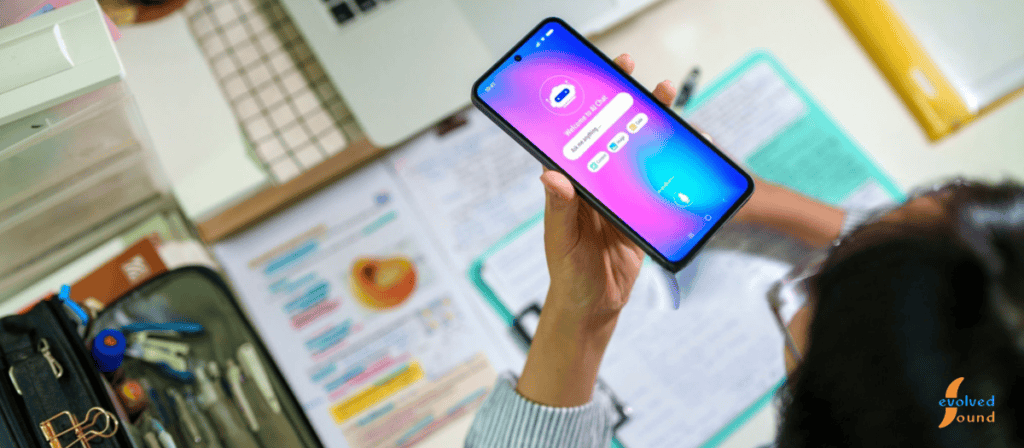
We’ve all been there: stuck on hold, listening to a 30-second loop of “your call is important to us” followed by generic pan-flute music. In 2026, your customers don’t have to endure that anymore. They simply tap a button on their iPhone or Pixel, put the phone on the desk, and let their AI assistant “babysit” the call.
Here’s the catch: These AI assistants are designed to identify “non-human noise.” When they detect a repetitive music loop or a generic recorded voice, they mute the audio entirely on the customer’s end. The AI only “wakes up” the caller when it detects a live human voice. This means:
- Your seasonal promotions? Muted.
- Your UVP (Unique Value Proposition) scripts? Silenced.
- Your effort to build a relationship? Invisible.
If over half of your callers are using AI to wait for you—which is the new baseline for Kiwi smartphone users—and your audio is being filtered out as “noise,” you aren’t just losing an advertising opportunity. You’re losing the chance to prime the caller for a successful conversation.
1. The Death of the “30-Second Loop” for AI Hold Assistants
The biggest mistake Kiwi businesses make is using short, repetitive audio loops. AI algorithms are incredibly efficient at spotting patterns. A 30-second track that repeats is the fastest way to get your business flagged as “automated background noise” by a smartphone.
To bypass the AI gatekeeper, you need Wait-Time Elasticity. This involves using longer, non-repetitive playlists where the music doesn’t just loop—it evolves. By moving to a managed service that refreshes content monthly and uses larger playlists, you prevent the “pattern recognition” that triggers the AI mute.
For example, a boutique hotel in Rotorua should be using a soundscape that mirrors the guest journey—not a MIDI file of Greensleeves that resets every 40 seconds. When the audio remains dynamic, the AI is less likely to categorize it as “static” background noise.
2. Audio Fingerprinting: Why Your Brand Needs a Sonic Logo
Think about the iconic “Spark” chime or the “TVNZ” mnemonic. These aren’t just sounds; they are audio logos. In an AI-driven world, your audio brand needs a high-contrast signature. When your hold audio contains a distinct, professionally produced sonic logo, it creates a “fingerprint” that stands out from background static.
Moreover, strategic placement of Human Cues is essential. Instead of a long, uninterrupted script, we recommend “interjections”—short, 10-second bursts of high-value information. These cues are often enough to “ping” the caller’s AI, keeping your brand top-of-mind without being filtered out as a generic loop. It’s about creating “Interruptive Value”—sounds that tell the AI, “Hey, this isn’t a machine, this is a brand experience worth listening to.”
3. The “Audio Whiplash” Risk: Why Technical Mastering Matters
Have you ever been on hold where the music is whisper-quiet, but the recorded voice suddenly blasts through your speaker? This is called “Audio Whiplash,” and it’s a conversion killer.
Beyond being annoying to humans, inconsistent volume levels (gain) confuse the AI. If the transition between your music and your messaging isn’t perfectly mastered, the AI assistant may misinterpret the jump in volume as a “line error” or a disconnected call.
Professional audio marketing isn’t just about the voiceover; it’s about technical mastering for specific phone codecs. New Zealand’s UFB network allows for much higher fidelity than older networks, but if your audio is compressed poorly at the source, it will sound “tinny” on a modern smartphone. Your audio needs to be engineered to sound rich on a tiny smartphone speaker, not just a studio headset.
4. The UFB Advantage: High-Fidelity Branding
New Zealand’s shift to Ultra-Fast Broadband (UFB) has changed the game. Unlike the mixed-technology networks found elsewhere, NZ’s direct fibre-to-the-premises initiative (reaching over 87% of the population) means businesses can now deliver HD-quality audio over their VoIP systems.
This is a massive competitive advantage. If your competitors are still using low-bitrate “telephone quality” audio, and you are delivering crisp, studio-mastered brand messages, the perceived value of your business skyrockets. In the mind of a customer, “high-quality sound” equals “high-quality service.”
5. Moving Beyond “Generic” to “High-Utility”
If you want to make a prospect say, “Holy moly, if this is how they handle a simple phone call, imagine what they do when I pay them,” you have to stop being boring.
Stop telling people they are “important”—prove it. Use your hold time to deliver High-Utility Content:
- The “Industry Insight”: For a Vet or Dental clinic, share a 15-second tip on pet health during a NZ winter or a new cosmetic procedure available at your practice.
- The “Local Connection”: Mention your community involvement or local NZ partnerships. Authenticity is the best way to bypass an AI filter.
- The Direct Action: “While you wait, we’ve sent a text to this number with a link to our digital compendium.” (This works by integrating your audio with your CRM).

The “Winning Edge” Strategy in On Hold Marketing
At Evolved Sound NZ, we specialise in the architecture of sound. Our systems don’t just “play music”; they manage a complex conversation between your phone system and your customer’s device.
By utilising dynamic, component-driven software, we can trigger messaging based on real-time factors—like time of day, current wait-time data, or even specific caller profiles. This is the high-performance standard of the audio world: faster, smarter, and purpose-built for the high-end NZ business owner.
Don’t let an AI assistant silence your brand. If you haven’t audited what your callers actually hear lately, you are likely losing leads before you even say hello.